

We are calling for greater awareness, early diagnosis and targeted screening for oesophageal cancer.
Action Against Heartburn is CancerWatch’s campaign for earlier diagnosis and improved outcomes for oesophageal cancer. This cancer is one of the least survivable cancers in the UK due to late diagnosis and limited options for treatment. Yet its key cause and symptom, excessive and persistent heartburn, is often ignored.
Action Against Heartburn is a long-standing campaign and is backed by a number of other charities, patient-support groups and individuals advocating for greater prevention and improved outcomes for oesophageal cancer. Among the organisations who support the campaign are: Barrett’s Patient Support; Cancer 52; Campaign Collective; GUTS UK; Gutsy Group; Guildford Patient Support; Heartburn Cancer UK; Less Survivable Cancers Taskforce; NOGCA – National Oesophageal and Gastric Cancer Audit; OOSO – Oxfordshire Oesophageal and Stomach Organisation; OCHRE Charity – Scotland; and OGCancerNI – Northern Ireland.
Background: the facts on Oesophageal Cancer
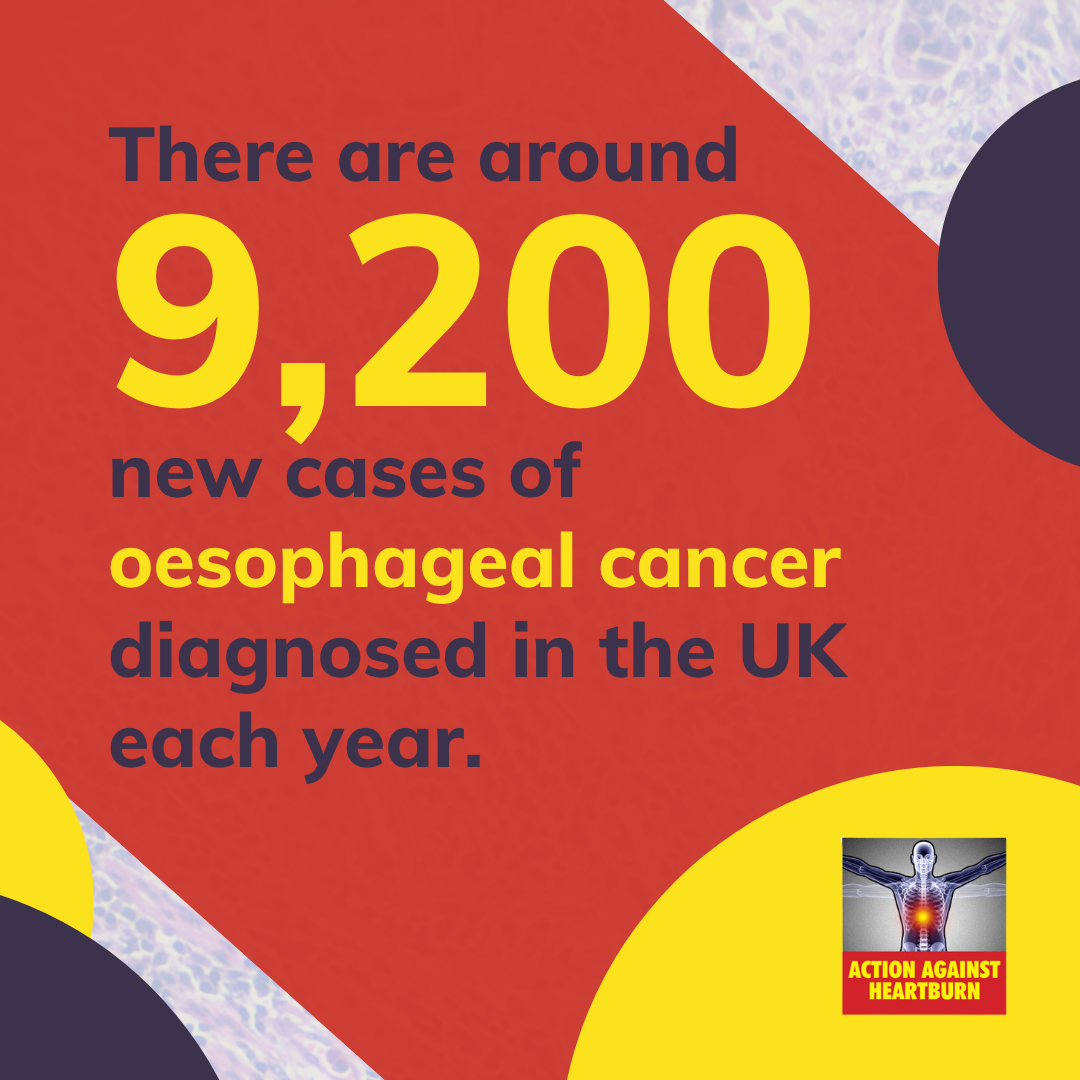
The oesophagus is the food tube that links the throat to the stomach. There are around 9,200 cases of oesophageal cancer in the UK diagnosed each year, with some 8,500 deaths. It is a lethal cancer for those who get it and has low survival rates. It is the seventh most common cause of cancer death in the UK. Cancer Research UK identifies oesophageal cancer as one of the most preventable cancers with smoking, obesity and alcohol among the main culprits at population level.1
The squamous cell type of oesophageal cancer tends to be caused by excessive smoking and alcohol (especially together), whilst the adenocarcinoma version, which is now the most common version in the UK, is caused primarily by heartburn, otherwise known as acid reflux. There are many causes of heartburn, but increasingly, a common underlying risk is obesity.
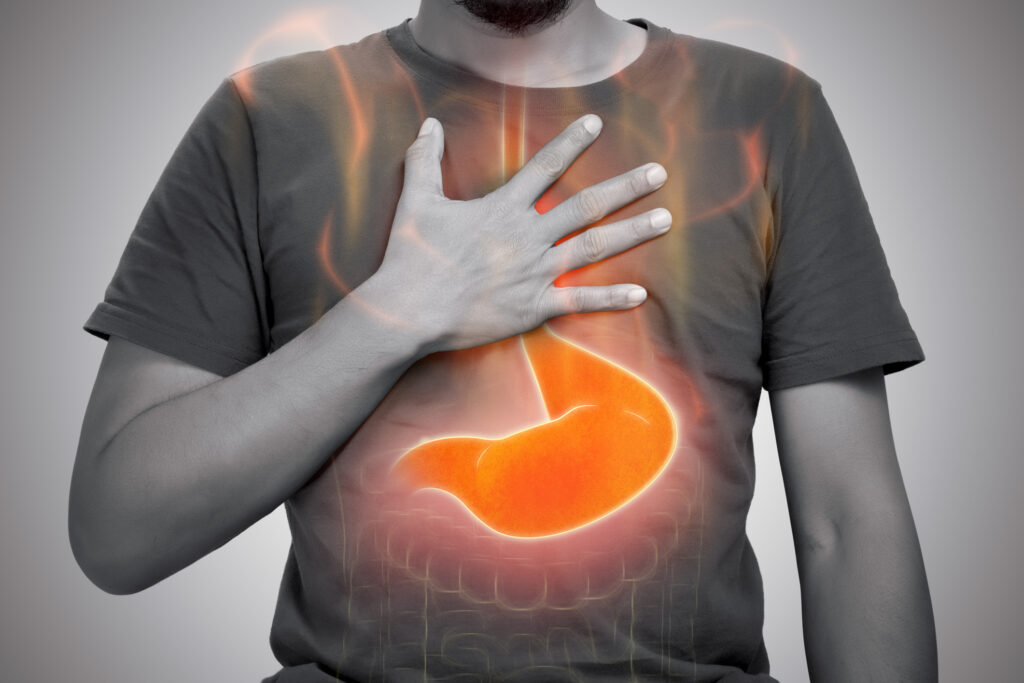
Heartburn is caused by stomach acids rising into the oesophagus and causes a severe burning sensation in the chest. Persistent and excessive heartburn can cause the oesophageal cells to mutate, a condition known as Barrett’s Oesophagus. In very rare cases, Barrett’s Oesophagus can turn into cancer.
Heartburn is very common in the population and so often the cancer “hides in plain sight” and by the time the symptoms become noticeable, it is often too late. Heartburn is more common in men because they tend to carry weight on their stomachs which forces stomach acids into the oesophagus, whereas women benefit from carrying weight on their hips. It is also much more common in older people than younger people. Some people have excessive heartburn and suffer no long-term consequences. However, for a small percentage the situation becomes fatal.
Additionally, many people fail to be alerted to the health issues surrounding excessive heartburn due to the efficacy of over-the-counter heartburn remedies ranging from Tums, Rennies and Gaviscon, to much stronger PPIs (proton pump inhibitors) such as Guardium, which reduce but also conceal the symptoms. This might be why statistics for Stage 4 presentations in this cancer have become worse in recent years rising in the last ten years from 25% to 36.5%.2
Advances in Oesophageal Cancer prevention and diagnosis
A key advancement in the earlier diagnosis of oesophageal cancer is the “sponge on a string”, a device developed by Prof. Rebecca Fitzgerald at Cambridge University. This consists of a capsule on a string that is swallowed and opens in the stomach as a sponge. A nurse extracts the sponge through the oesophagus using the string where the relevant cells are caught by the sponge and are sent to a pathology lab for testing. The benefit of this device is that it is considerably cheaper, easier and less invasive than endoscopy, which is the current method of diagnosis, and so could develop into a targeted screening process. The use of AI assisted interpretation of pathology samples will greatly enhance the device’s effectiveness.3
The device is currently undergoing “BEST4” trials to prove it reduces mortality, and under the new National Cancer Plan it is about to be considered for authorisation by the NHS National Healthtech Access scheme which assigns priority for gaining approval from NICE.4
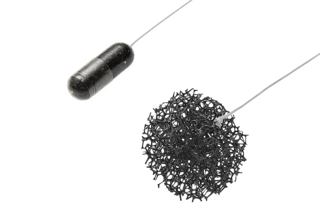
Courtesy of Cyted
The Action Against Heartburn campaign
What we are calling for
• Greater awareness and information of oesophageal cancer, a cancer which “hides in plain sight”
• Earlier diagnosis of the cancer to increase options for treatment and thus improve outcomes.
• The development of a targeted screening process using capsule sponge technology leading ultimately to a minimally invasive targeted screening system.
About the campaign
The Action Against Heartburn campaign was set up in 2013 by a group of like-minded organisations, charities and patient support groups advocating for improved outcomes for oesophageal cancer, and now has a network of links throughout the oesophageal cancer community. It has a mailing list of almost 50 interested supporters and activists and holds meetings every year to develop its advocacy and carry out its key activities.
These activities are as follows:
- Every year it holds a February Oesophageal Cancer Awareness Week, professionally led and managed by Campaign Collective (campaigncollective.org) a social enterprise PR and media firm which has staff with specialist knowledge of less-common cancers. A steering group from Action Against Heartburn sets the theme for the Week and Campaign Collective carries out the press and social media outreach with the help of Action Against Heartburn’s supporters.
- It is a founder member and board member of the Less Survivable Cancers Taskforce which advocates for the cancers with the poorest outcomes, and which forms the secretariat of the APPG on Rare and Less Common Cancers.
- It is a member of the Patient and Lay Person’s panel of the NHS National Oesophageal and Gastric Cancer Audit (www.nogca.com) which develops the clinical audits into a document suitable for patients, their carers and lay people. These audits enhance the transparency and visibility of oesophageal cancer outcomes in the NHS.
- It is an active member of Cancer 52 and contributes to its public affairs strategy group.
- It also provides references and written support for scientists and clinicians requesting patient and lay persons’ support for funding applications for their scientific research and clinical trials.
In spite of the dire outcomes for oesophageal cancer, there are considerable reasons for optimism. Action Against Heartburn is dedicated to making sure the outcomes from oesophageal cancer are the best they can be.
- Cancer Research UK, Oesophageal cancer statistics ↩︎
- Cancer Research UK, Early Cancer Diagnosis Data Hub ↩︎
- Cancer Research UK, New oesophageal cancer screening trial begins testing the capsule sponge, 2024 ↩︎
- Department of Health and Social Care, The National Cancer Plan for England: delivering world class cancer care, 2026 (p 58-59) ↩︎