
This week we’ve written to the minister for public health and prevention and to the UK National Screening Committee to push for further action on prevention and early diagnosis of bowel cancer. This is part of our ongoing Action Against Bowel Cancer campaign.

Our message is clear. With a stronger focus on bowel cancer prevention and continued improvements to screening, alongside continuing improvements in treatment, we could, and should, be aiming to drastically reduce deaths from bowel cancer over the coming decades.
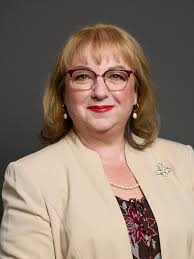
Our letter to Sharon Hodgson MP, who has recently been appointed as Parliamentary Under-Secretary of State at DHSC and minister for public health and prevention, outlines the key elements of what we believe an effective push on bowel cancer prevention and early diagnosis could look like.
We are calling on the Minister and the Department of Health and Social Care to do three key things:
- Implement a wide-ranging plan to boost the number of Britons eating a higher fibre diet with an initial focus on school meals and food in public sector settings. Did you know that diets low in fibre account for 28% of all bowel cancer cases?
- Consider further extending the scope of the bowel cancer screening programme and increasing the sensitivity of the screening test over time. Building up sufficient diagnostic capacity in the NHS would allow the sensitivity of the test to be increased and many more people to be diagnosed early.
- Use the screening programme to boost understanding of bowel cancer and awareness of how people can reduce their risk.
Because the bowel cancer screening programme is so central to the battle against bowel cancer, we have also written to Sir Mike Richards, Chair of the UK National Screening Committee (UK NSC).
It is UK NSC’s responsibility to weigh up the scientific evidence and make recommendations to the government on screening programmes in the UK. The extension of the national bowel cancer screening programme has led to real progress against bowel cancer in recent years, but we need to continue to improve and extend this programme, especially if we are to make the kind of progress in early diagnosis targeted by the National Cancer Plan.
Among other things, we have asked the UK NSC:
- To actively review the case for extending the screening programme to those aged 75-79 and set out the evidence base for the upper age limit.
- For their support in asking the government and the NHS to consider whether notifications about bowel cancer screening can be used to deliver written information about bowel cancer and bowel cancer prevention.
We believe this last request to both the Minister and the UK NSC should be a ‘no-brainer’. The use of screening as a tool for providing information on the prevention of future disease could be one of its most important potential functions. It could be extended to other programmes as well – there is no reason for instance that lung cancer screening notifications could not include effective communication about smoking cessation.
Knowledge is power. Effective cancer prevention requires increased knowledge and understanding. And effective prevention measures are always cost effective.